MemX for Journalists
Every quote, one ask away.
Interviews, documents and sources, searchable with a citation.
Free to start. Private by architecture.
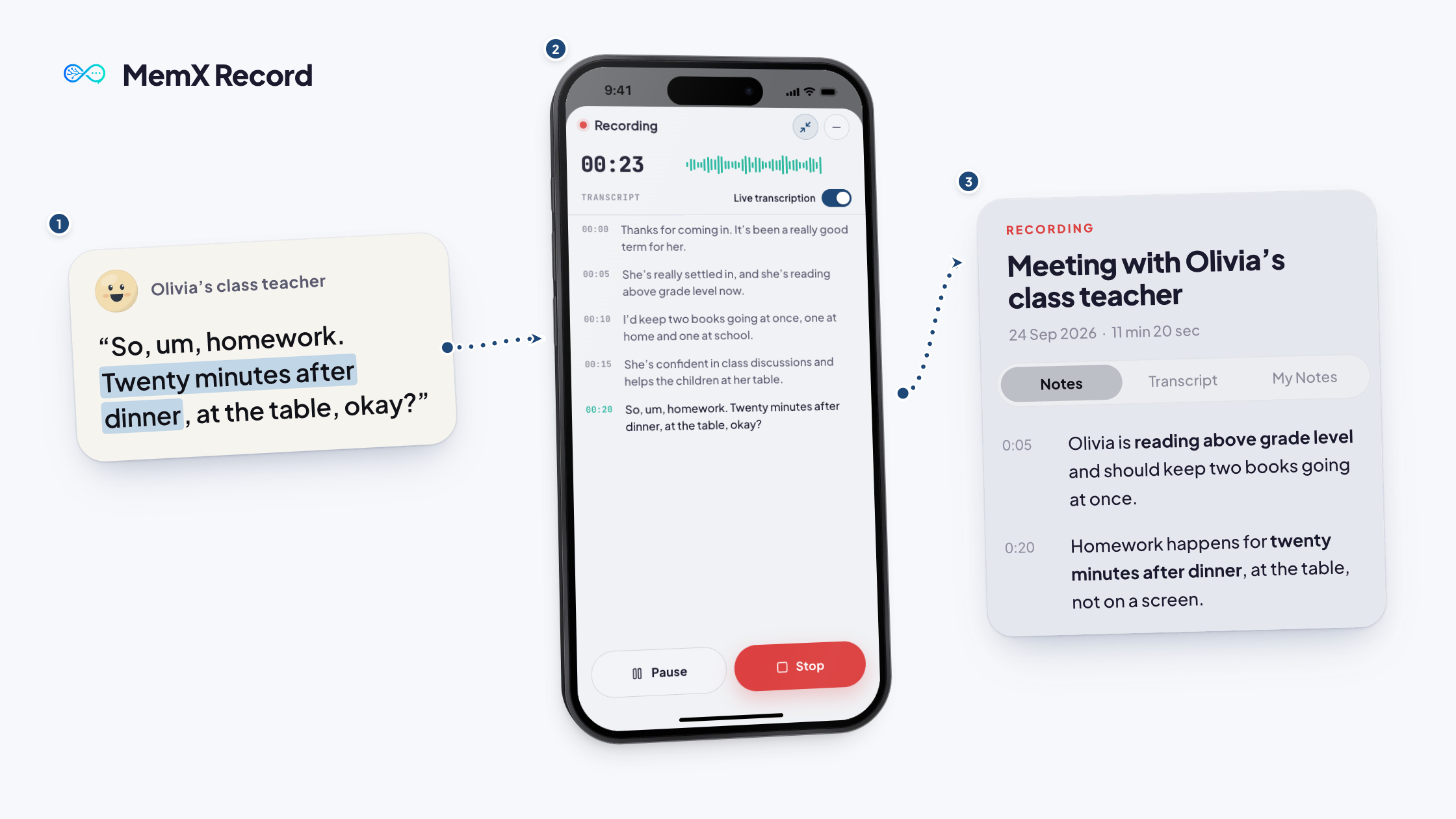
Record the interview.
Short voice notes become text you can search.
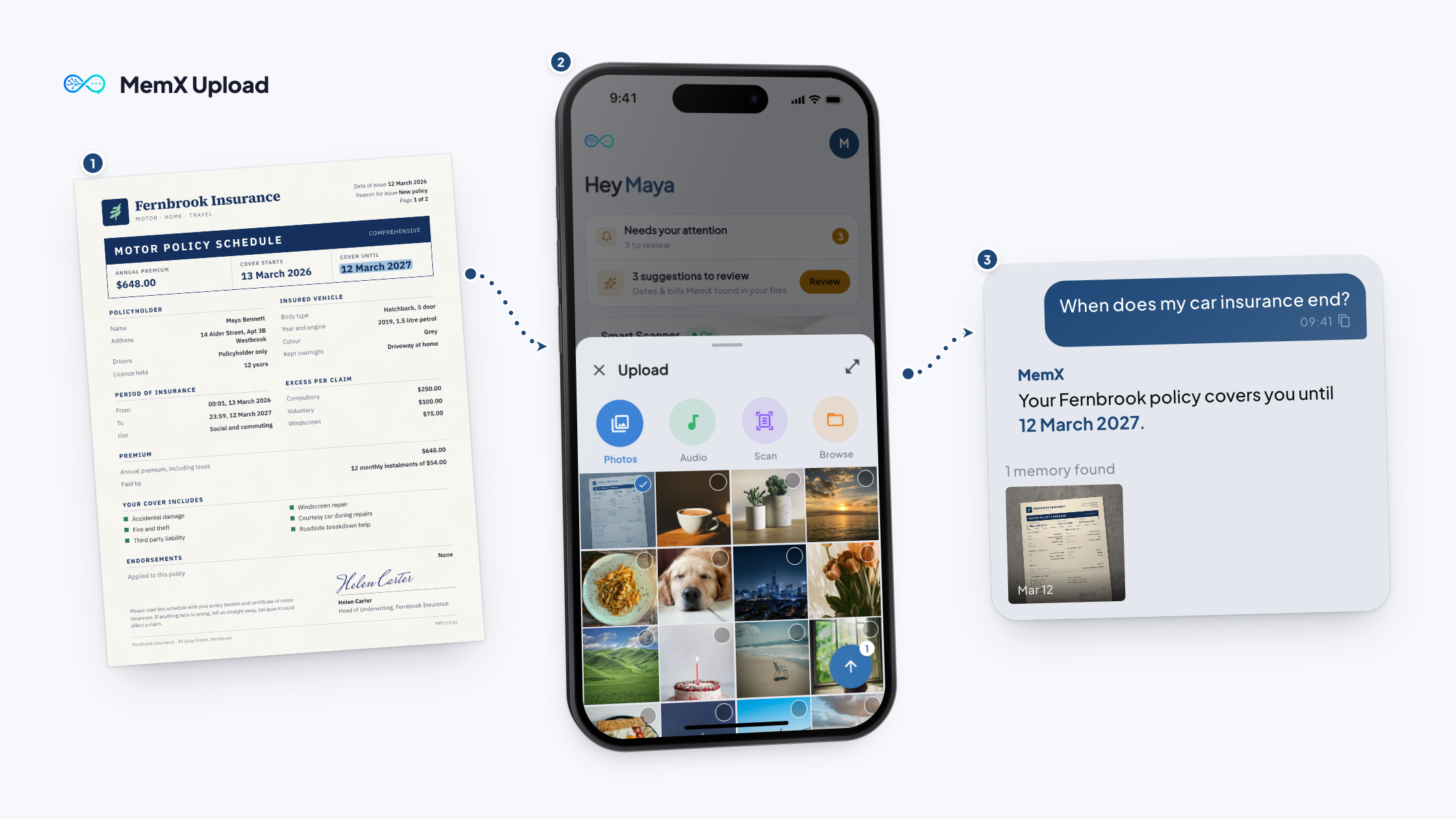
Add the long PDF.
Upload the document. Ask what it says about a name or a date.
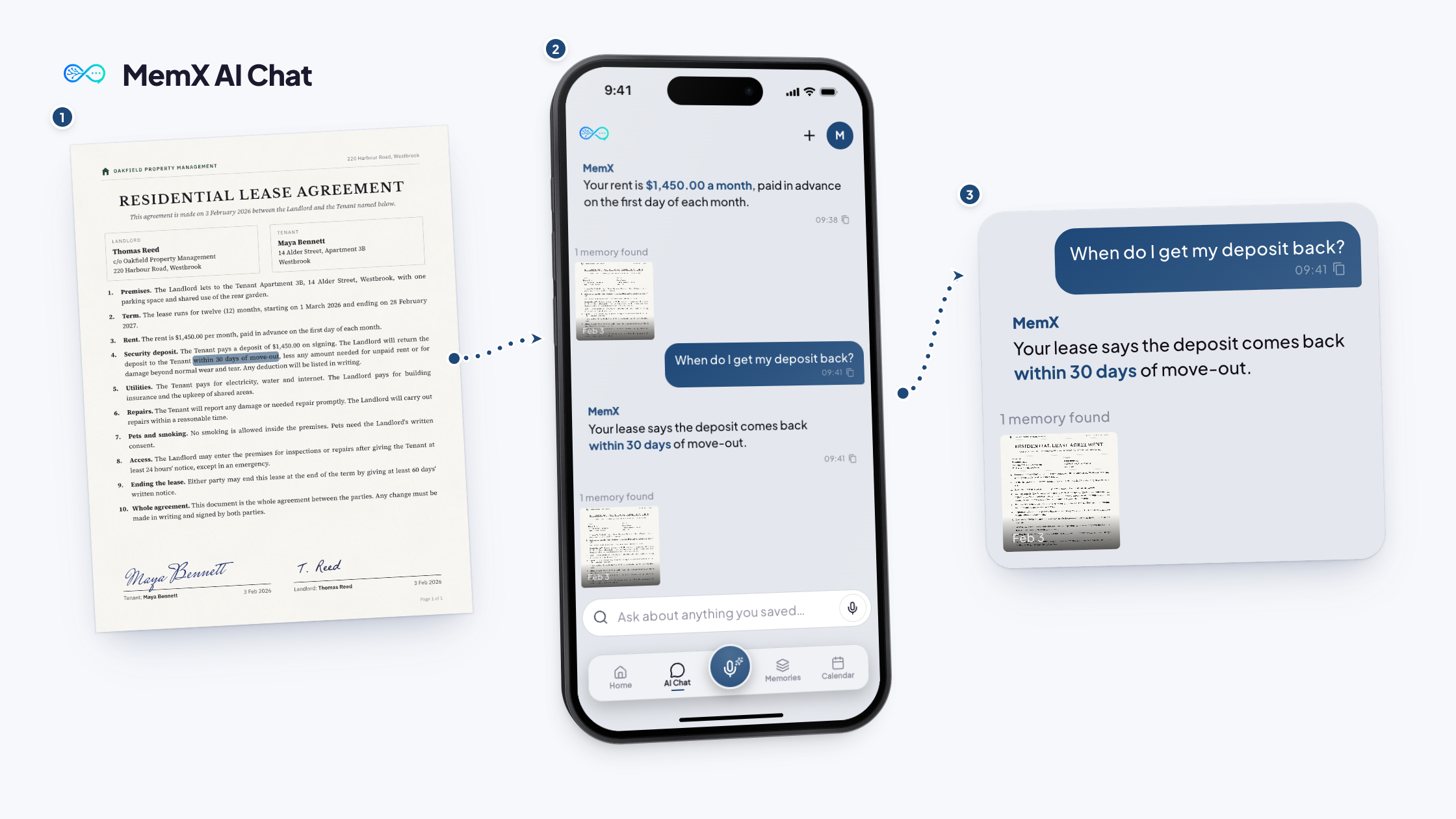
Ask for the quote.
Get the answer and the memory it came from.
What changes for you.
Verify first
Answers show the memory they came from.
Works in the field
Queue uploads without signal. Ask once online.
Private by architecture
A key per account, encrypted at rest.
Questions
Can MemX transcribe my interviews?
Yes. Tap Record, talk, and MemX transcribes in any language. Each transcript is indexed as a searchable memory, and you can ask MemX to find a specific quote later and see the recording it came from.
How does MemX protect my sources and sensitive documents?
MemX is private by architecture: a key per account, encryption at rest, and every decryption audit-logged. Your content never trains any AI model. MemX does not provide legal protection or guarantee source anonymity, so handle high-risk sourcing with your newsroom's own protocols.
Can I ask questions about a long leaked PDF?
Yes. Add the PDF and use Ask MemX, which runs vector search and RAG across the document and returns a synthesized answer with the source memory shown beside it. Open the original to verify it before publishing rather than trusting the summary.
Does MemX work in the field without signal?
You can queue uploads and browse cached memories offline. Recording transcription, search and answers need a connection.
Can I get my notes and data out?
You can save any original file or its extracted text to your device from its share sheet, and you can request a copy of your personal data by email from Settings.
Why journalists use MemX for reporting
The reporting workflow leaks information. Interview audio sits untranscribed for days, the killer quote is buried somewhere in a three-hour recording, the leaked PDF is 200 pages, and the source you met at a conference is a business card you can no longer find. About seven-in-ten U.S. journalists (71%) say made-up news and information is a very big problem for the country, higher than the 50% of U.S. adults who say the same (Pew Research Center survey of 11,889 U.S. journalists, 2022). Getting it right starts with being able to find what a source actually said, and that comes down to capture and retrieval.
MemX captures the moment as it happens (record the interview, scan the document, photograph the whiteboard, snap the source's card) and indexes everything so you can ask "what exactly did the mayor say about the budget?" or "which document mentions the August invoice?" and get a synthesized answer with the source memory shown beside it. You can queue uploads and browse cached memories offline. Recording transcription, search and answers need a connection.
MemX does not give legal protection or guarantee source anonymity. Follow your newsroom protocols for high-risk sources.
Find what they said.
Capture now. Check the source later.
Free to start. Private by architecture.