MemX for Doctors
Your own notes, found in seconds.
Voice notes, scans and records for you, not your patients.
Free to start. Private by architecture.

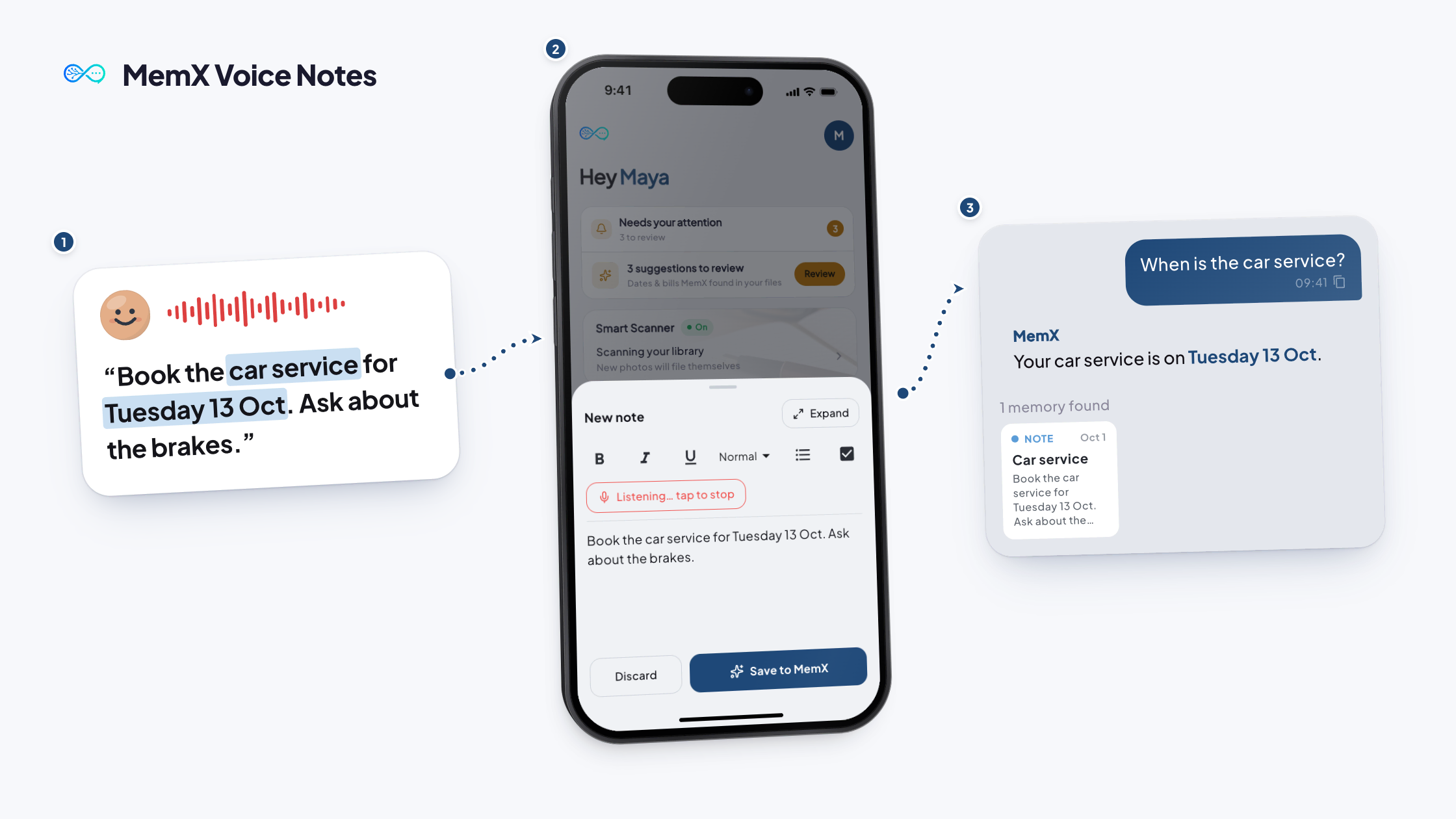
Talk after the session.
Speak a short recap of a CME talk. MemX writes the note.
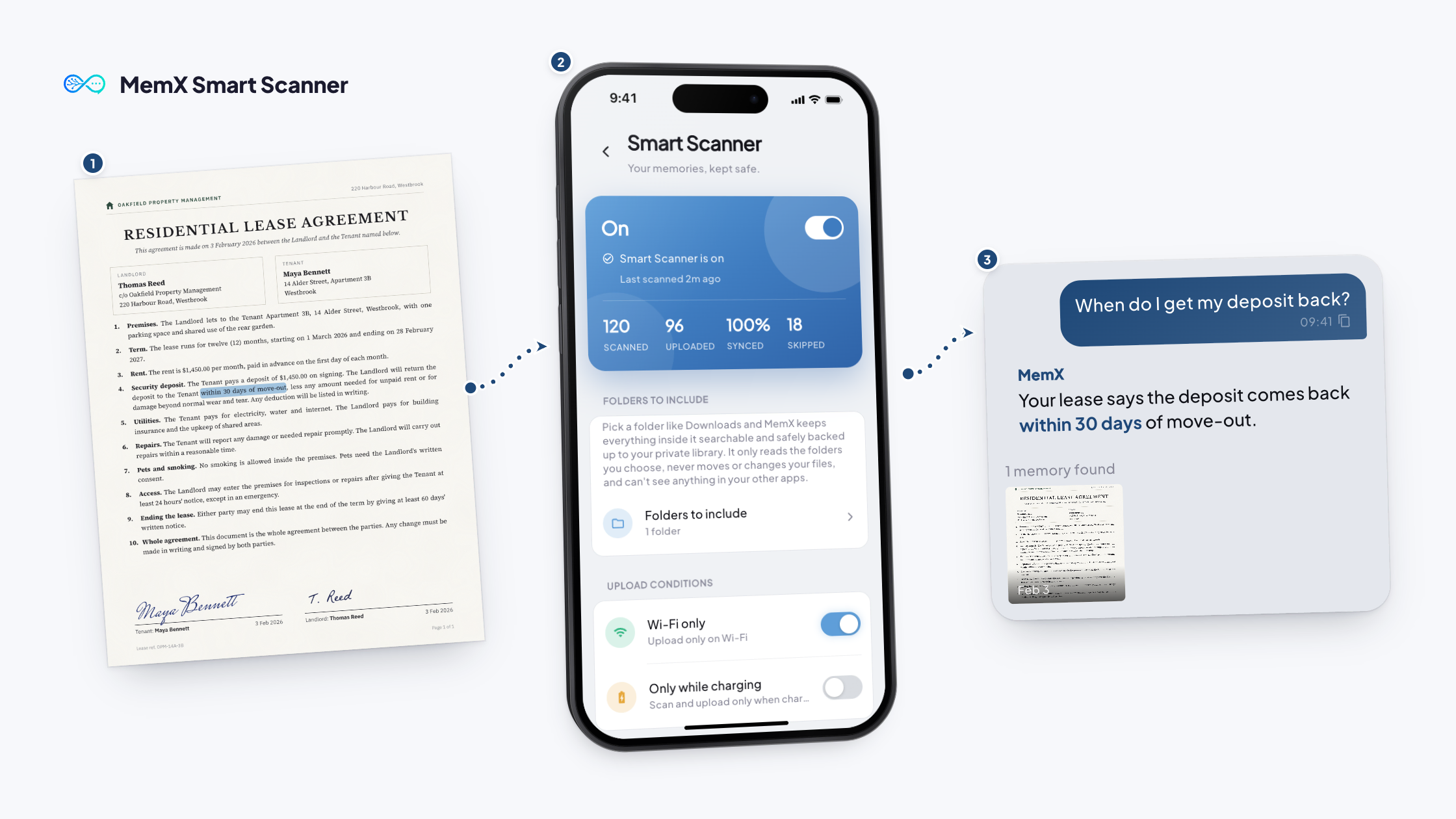
Scan your own records.
A prescription or lab report written for you, saved and readable.
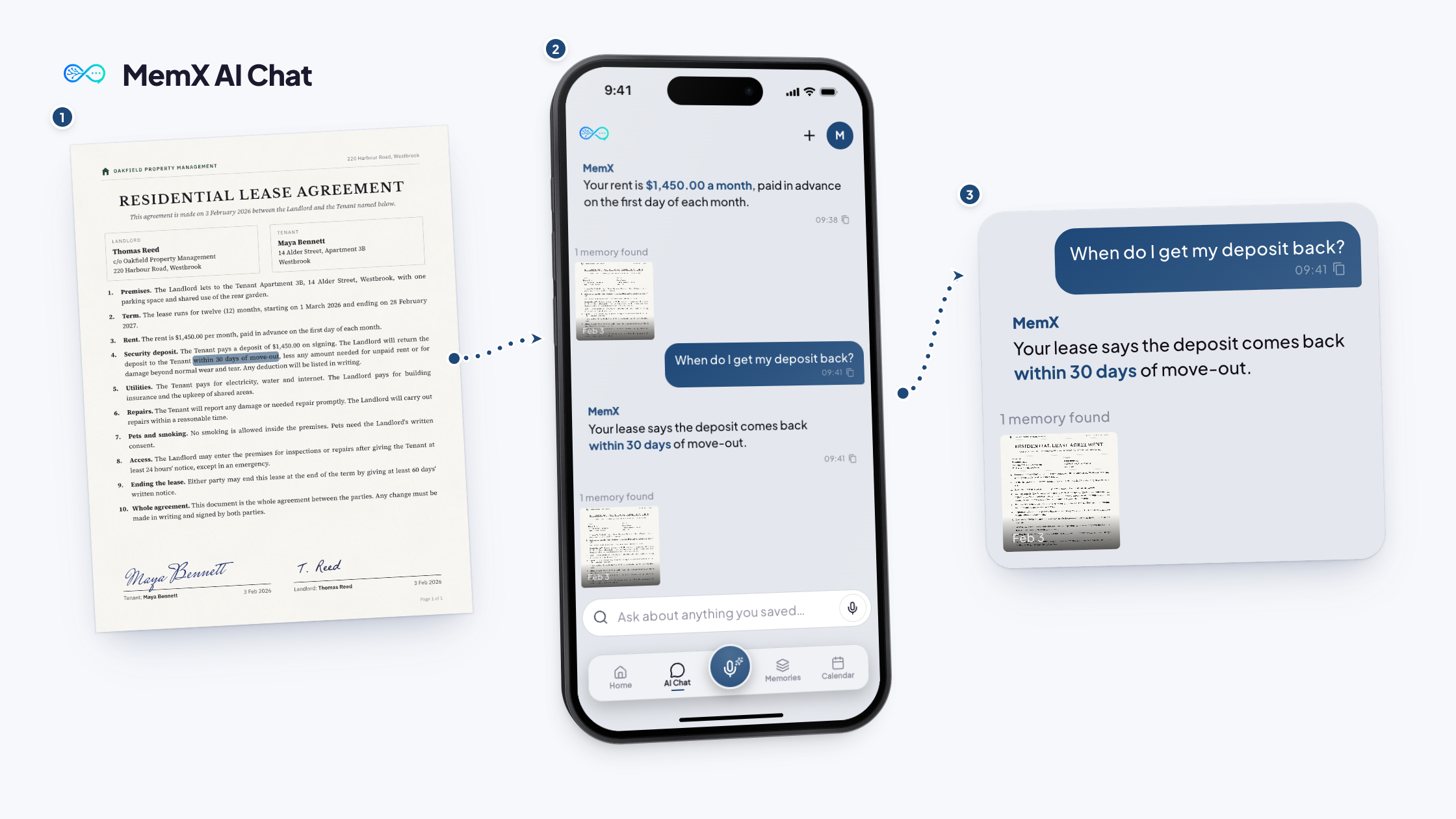
Ask. Get the source.
Ask in your own words. See which note the answer came from.
What changes for you.
Voice first
Talk for a minute and get a clean note.
Your own records
Prescriptions and lab reports, searchable.
Cited answers
Answers show the note they came from.
Questions
Can I store patient records or PHI in MemX?
No. MemX is a personal app for your own notes and records, not a clinical system. It is not an EHR and is not marketed as a HIPAA-compliant patient-record system. Do not put patient health information into it. Use it for your own CME notes, conference captures, business cards, and your personal prescriptions or lab reports.
How does MemX protect my data?
MemX is private by architecture: a key per account, encryption at rest, and every decryption audit-logged. Your content is never used to train any AI.
Can MemX help me track CME and license renewals?
Yes, for your own records. Capture session notes by voice, scan your certificates with Document Scanner, and let MemX turn a plain-language request like "remind me every March" into a reminder you review before it is set. MemX is an organizer for your notes, not an official CME tracking authority.
Does MemX work offline?
Asking, searching and AI need a connection. You can browse cached memories and queue uploads offline.
What does MemX cost for an individual doctor?
MemX is free to start. Paid plans add more credits, storage and audio.
Why doctors use MemX for personal notes
Doctors carry a heavy personal admin load alongside clinical work. State licensing boards require ongoing continuing medical education; the Texas Medical Board, for example, mandates at least 48 CME credits every 24 months, and every conference session, journal club, and workshop generates notes worth keeping. MemX is built for that personal layer, not for clinical use: do not put patient PHI into it and do not treat it as an EHR or HIPAA-compliant patient-record system.
Capture a 60-second voice summary after a CME session, photograph the speaker’s business card, scan your own lab report or a prescription written for you, and MemX indexes all of it so you can ask "what did the cardiology keynote say about the new guideline?" or "when was my last tetanus booster?" and get an answer with the source memory shown beside it. Everything stays encrypted, and your content is never used to train any AI.
MemX is for your own notes and records. It is not an EHR and not a patient-record system, so do not put patient health information into it.
Every note, one ask away.
Capture by voice, scan your own records, ask in plain words.
Free to start. Private by architecture.