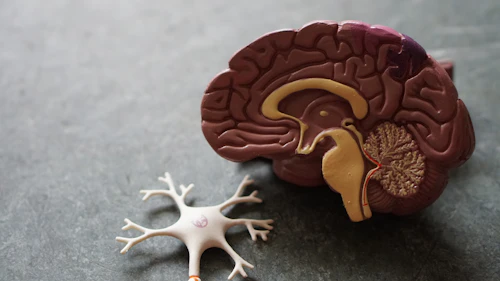
Human memory rebuilds itself every time you use it. AI memory, the kind chatbots rely on to recall what you told them last week, mostly just stores what you said and hands it back when asked. That single mechanical difference explains why your memory of an old argument keeps shifting while a chatbot's memory of your coffee order does not, at least not until someone deletes it or a retrieval system pulls the wrong record.
Neither system is more real than the other. They run on entirely different principles. One works through reconstruction, cues, and emotional weighting, shaped by evolution to prioritize meaning over detail. The other works through storage, search, and pattern matching, built by engineers to prioritize retrieval speed over context. Knowing which is which changes what you should trust each one to get right.
How your brain actually remembers something
Cognitive scientists have known for close to a century that memory does not work like a video recording. In 1932, British psychologist Frederic Bartlett had people read an unfamiliar folk tale called The War of the Ghosts, then retell it from memory repeatedly over days and weeks. The retellings drifted every time. Unfamiliar details got swapped for familiar ones, canoes turned into boats and hunting turned into fishing, and the story reshaped itself to match the readers' own cultural expectations. Bartlett concluded that recall is a construction, assembled from fragments and existing mental frameworks, rather than a playback of stored footage.
Modern cognitive science backs this up. Retrieving a memory means pulling together fragments of an experience using cues such as mood, location, and current knowledge, so the same event can come back differently depending on what triggered the recall and what you already believe. Psychologists describe this as reconstructive rather than reproductive. Every act of remembering behaves more like writing a new draft from scattered notes than opening a saved file.
There is a mechanical reason recall keeps drifting. Neuroscientists describe a stable, long-term memory as re-entering a temporarily unstable, editable state whenever it gets retrieved, a process called reconsolidation. While a memory sits in that unstable window, new information, current mood, or a leading question can get folded into it before it settles back into storage. In practice, the act of remembering something is also, quietly, an act of rewriting it a little.
The 1974 experiment that proved memory can be rewritten
The clearest demonstration is a study published in 1974 by psychologists Elizabeth Loftus and John Palmer. They showed 45 university students films of car crashes, then asked how fast the cars were going, changing only the verb in the question. Participants asked how fast the cars were going when they smashed into each other estimated 40.8 mph on average. Participants asked the identical question with the word contacted instead estimated 31.8 mph, a 9 mph gap produced by swapping a single word.
The wording did not just shift a number. A week later, the same participants were asked whether they remembered seeing broken glass at the scene, even though the film showed none. Among people originally asked about cars that smashed into each other, 32 percent said yes. Among those asked about cars that merely hit each other, only 14 percent said yes, close to the 12 percent of a control group who were never asked a speed question at all. One misleading verb had planted a memory of something that never happened.
Loftus spent the following three decades extending this finding, showing that people can be led to misremember car accidents, crimes, and even entire childhood events that never occurred. She later summarized the body of work as a thirty year investigation of the malleability of memory, and it remains one of the most replicated findings in cognitive psychology.
Forgetting is not a bug, it is scheduled
Forgetting looks like a flaw until you notice how predictable it is. German psychologist Hermann Ebbinghaus spent years, from 1880 to 1885, testing his own memory for meaningless syllables such as WID and ZOF, then measuring how much faster he could relearn a list compared with learning it from scratch. He called that relearning advantage savings, and it fell fast at first before leveling off. In his data, savings dropped from 58 percent after 20 minutes to 44 percent after one hour and roughly a third after a day, then flattened into a long, shallow decline. The shape became known as the forgetting curve.
A 2015 replication published in PLOS ONE, run by researchers Jaap Murre and Joeri Dros using Ebbinghaus's original method more than a century later, produced a closely matching curve across most intervals, with the two data sets diverging only at the longest gap tested. That overall consistency matters, because it shows forgetting is not random noise. It behaves like a scheduled, biologically useful process that clears out low value detail so the brain can keep prioritizing information reinforced by repetition or emotional weight.


What AI memory actually means inside a chatbot
AI memory is a marketing term for a couple of specific engineering tricks, and most products mix both. The first is explicit fact storage: the system extracts a short statement, such as user is vegetarian or user's dog is named Miso, and writes it to a database record tied to the account. The second is embedding based retrieval: the system converts text into a vector, a long list of numbers representing its meaning, stores that vector, and later searches for the stored vectors closest to a new query using similarity math instead of keyword matching. Engineers named this retrieval plus generation pattern retrieval augmented generation in a 2020 research paper, and the term stuck as the standard description for how most AI memory features work today.
- Explicit fact storage writes a specific statement down as is and returns it on request, similar to a note in a database.
- Embedding based retrieval converts text into coordinates in a meaning space, then returns whatever stored coordinates sit closest to a new question.
- Retrieval augmented generation inserts the closest matches into the model's prompt, so an answer is grounded in retrieved text instead of only in what the model learned during training.
- Neither mechanism checks whether a stored fact is still true. Both simply return whatever is closest to the query.
ChatGPT's memory feature is a public example of these mechanisms at work, and it shows how quickly the engineering shifts. It launched as two separate layers: an explicit saved memories list for facts a user stated directly, plus a setting that let the model search past conversations for relevant context. By 2026, OpenAI had replaced that split with a unified memory system that runs a synthesis step after a conversation ends, reads across chat history, and updates a memory summary automatically instead of waiting on an explicit save command, revising a stored detail like an upcoming trip once the date has passed instead of leaving it stale. People can still view that summary, correct specific details, or turn memory off entirely from account settings, which remains a real difference from human memory. There is no equivalent setting for correcting what your brain decided to keep.
Why AI does not forget the way you do
Stored text and stored vectors do not decay on their own. A fact written to a database in January is exactly as available in December unless it gets deleted, overwritten, or excluded by a retention policy. There is no forgetting curve quietly trimming old entries for relevance in the background. Whatever forgetting a chatbot appears to do is really a design choice: a context window that only holds so much at once, a memory feature that only saved certain details to begin with, or a policy that deletes chat logs after a set period.
That permanence cuts both ways. It means an AI memory system can hand back the exact phrasing of something said eight months ago, which no human could reliably do. It also means a fact that stops being true, an old address, a former job, a plan that changed since, can sit in storage and keep getting served up as current unless something corrects it: a person editing the record, or, in newer systems such as ChatGPT's Dreaming update, a background process built specifically to catch stale details. Human memory updates itself as a byproduct of being biological. Machine memory only updates when a person or a program was deliberately built to do that updating.
Where each one actually breaks
Both systems fail with confidence, which is what makes the failures risky to lean on. Human false memories can feel exactly as vivid as accurate ones. Eyewitness identification, built on confident but reconstructed recall, has been linked to roughly 69 percent of DNA based exonerations in the United States, more than any other single factor, according to the Innocence Project.
AI memory fails differently but just as confidently. When a model retrieves the wrong stored fact, or generates text around a gap in what it actually knows, it does not hedge by default. Researchers at OpenAI described the mechanism behind this directly in a September 2025 paper: language models are trained and graded in ways that reward confident guessing over admitting uncertainty, the same incentive that pushes a student to guess on a multiple choice question rather than leave it blank. The result is fluent, specific, wrong answers delivered in the same tone as correct ones, a failure mode commonly called hallucination.
Memory features add a quieter failure mode on top of hallucination: retrieval mismatch. Consider someone who tells an AI assistant early in a project that the budget is 50,000 dollars. Months later the budget changes to 80,000 dollars, but the change never gets stated as an explicit correction. A retrieval system indexed on the original message can keep surfacing the old figure indefinitely, because nothing marked it as outdated. A person is far more likely to sense that the number feels wrong, or to have quietly let the old figure fade, even though that fading is not perfectly reliable either.
Human memory vs AI memory at a glance
The mechanisms line up less like opposites and more like two tools built for different jobs, which is easier to see side by side.
| Dimension | Human memory | AI chat memory |
|---|---|---|
| How it stores something | Reconstructs a version from fragments and context each time | Writes text or a numeric embedding to a database record |
| How it retrieves it | Cue triggered reconstruction shaped by mood and current knowledge | Keyword lookup or nearest neighbor similarity search |
| How it forgets | Decays on a predictable curve unless reinforced by review | Does not decay on its own. Persists until deleted or excluded |
| What corrupts it | Leading questions, suggestion, and information encountered after the event | Irrelevant retrieval matches, stale facts, and generation errors |
| Confidence versus accuracy | A false memory can feel exactly as vivid as a true one | A wrong answer can sound exactly as fluent as a correct one |
| Best at | Gist, emotional tone, and the general meaning of an event | Exact wording, dates, and figures, when retrieval works correctly |
What this means for what you trust each with
None of this makes AI memory better than human memory. It makes them suited to different jobs. Human memory is tuned for meaning. It keeps the emotional shape of an event and drops the exact wording, which is usually the right trade for living an ordinary life but the wrong trade for legal testimony or precise record keeping. AI memory is tuned for retrieval. It keeps exact wording and drops nothing on its own, which is useful for recalling a preference from months ago but risky when the stored fact is outdated or was never correct to begin with.
There is one more asymmetry worth knowing. A person cannot consciously delete a false memory once reconsolidation has folded it into the original, which is why correcting a false memory rarely erases it. It usually just adds a competing version that has to compete with the original every time it comes up. An AI memory record, by contrast, can typically be deleted or edited outright, which makes correction far more reliable, provided someone actually goes and does it.
- Treat a vivid, confident memory as a reconstruction, not a transcript, especially for exact words, numbers, or the order events happened in.
- Do not assume an AI tool's memory is accurate just because it is consistent. Consistently retrieving a wrong or stale fact still produces a wrong answer every time it is asked.
- When a chatbot's memory of you needs correcting, correct it directly in settings. It will not update on its own the way human memory quietly does.
- For anything high stakes, a contract detail, a medical fact, a legal date, verify it against the original source rather than trusting either your recollection or an AI's stored version.
AI memory that never forgets raises a different question than accuracy: who can see what it is holding onto. MemX (memx.app), an external memory layer for AI tools, is private by architecture, built on per-user isolation, encryption at rest with customer-managed encryption keys, and on-device processing where possible, with no training on stored user data. That does not make a retrieved memory more accurate. It does mean the record sitting in storage, waiting to be pulled up months from now, is not something anyone outside the account gets to read.
01Does AI actually remember conversations the same way a human does?
No. Human memory reconstructs a version of an event from fragments each time it is recalled. AI memory typically stores exact text or a numeric embedding and retrieves it through search, which behaves more like a database lookup than human recollection.
02Why do people misremember things with total confidence?
Because recall is reconstructive, not a replay. Research by Elizabeth Loftus and others shows that misleading details introduced after an event, even a single changed word in a question, can get folded into a memory that then feels just as vivid as an accurate one.
03Does ChatGPT or other AI chatbots forget what you tell them over time?
Not on their own. Stored facts and referenced conversation history persist until a user deletes them, a setting excludes them, or a retention policy removes them. There is no natural decay the way there is with human memory.
04Can an AI's memory be wrong even though it never forgets?
Yes. A memory system can retrieve a fact that is now outdated, pull something semantically similar but factually irrelevant, or generate a confident answer around a gap in what it actually knows, a failure researchers call hallucination.
05Why is eyewitness memory considered unreliable in court?
Because identification depends on reconstructed recall, which is vulnerable to suggestion and stress. The Innocence Project has linked eyewitness misidentification to roughly 69 percent of DNA based exonerations in the United States, more than any other single factor.